IN·JOY
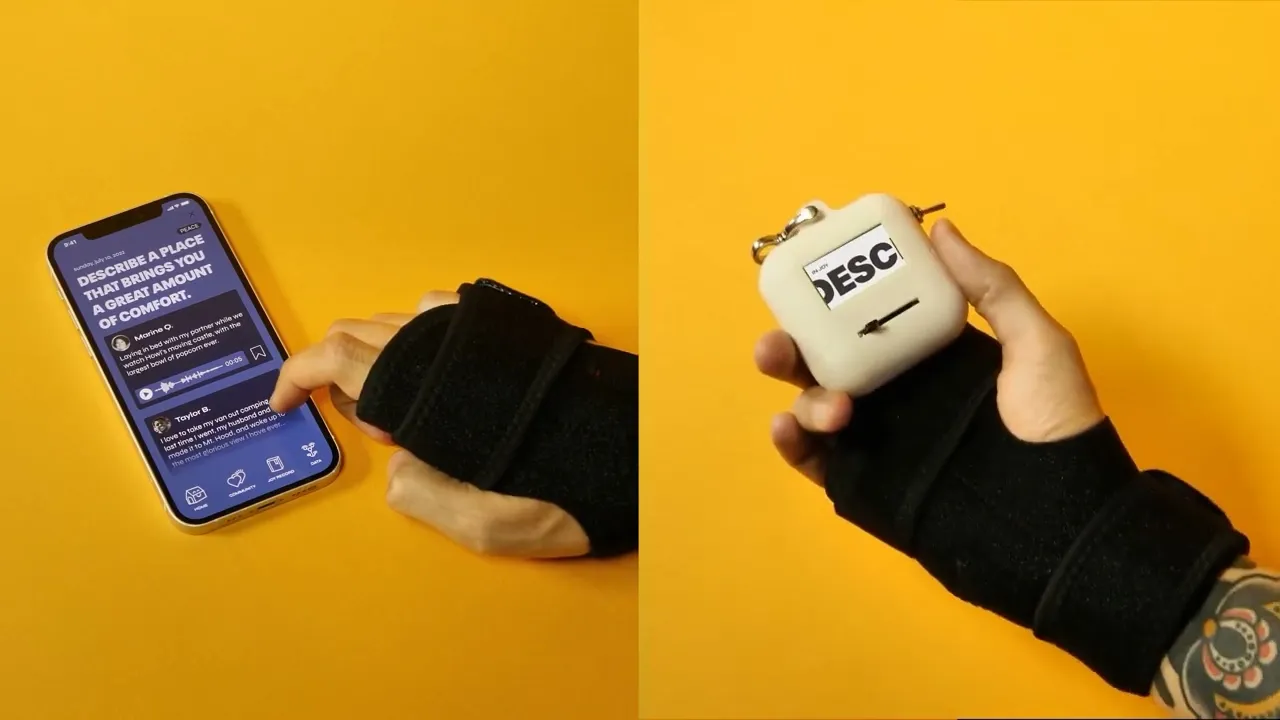
IN·JOY is a speculative design project exploring how we might support people living with chronic illness–particularly those navigating undiagnosed conditions–through practices of daily joy, reflection, and community. Grounded in qualitative research with patients and medical practitioners, the project uncovers the emotional and psychological toll of chronic illness, including nervous system dysregulation, isolation, and the absence of support prior to diagnosis. In response, IN·JOY reimagines community as a gentle, listening-based experience, pairing a mobile app with a tactile device to deliver daily prompts and shared moments of joy from others with similar lived experiences. By expanding identity beyond illness and toward connection, grounding, and small moments of meaning, IN·JOY offers an alternative model of care–one that is accessible, non-clinical, and rooted in human connection.
DAte
Aug 7, 2022
Category
Product Design
Reading Time
10 minutes

“Sometimes your joy is the source of your smile, but sometimes your smile can be the source of your joy.”
― Thich Nhat Hanh
In·Joy is the result of my thesis work during my time at the Copenhagen Institute of Interaction Design.
Trigger warning: This article recounts details of trauma, depression, and suicidal ideation.
Language clarification: I use the term ‘disabled’ and ‘chronic illness’ interchangeably. The participants interviewed for this project experience disability in the form of chronic illness.
It could, and dare I say, should be argued that joy is available to everyone. A hymn of gratitude, peace, and wellbeing that connect us together as humans. However, we have all been through periods of our lives where joy feels more distant, our brains know that joy is theoretically possible, but it’s been mired under the weight of depression, circumstance, or some other mental or physical burden. This is especially true for people experiencing disability and chronic illness.
What is Disability?
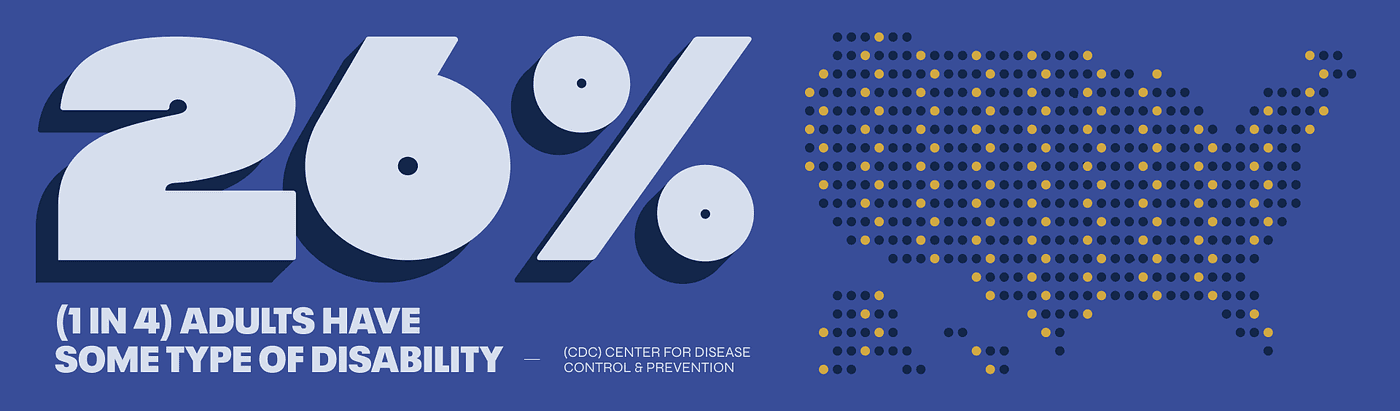
Disability is a BIG problem in the United States. According to the CDC (Centers for Disease Control & Prevention) ‘26% (1 in 4) adults have some type of disability.’
Press enter or click to view image in full size
The nature of chronic disease implies that care is needed over long periods of time, which results in chronic conditions being the primary driver of healthcare costs.
“[Chronic diseases account] for 90 cents of every dollar we spend on healthcare in this country. In 2011, this amounted to $2.3 trillion of the $2.7 trillion spent on health care.” — Partnership to Fight Chronic Diseases
But, how does the CDC define disability?
“[a disability is] any condition of the body or mind (impairment) that makes it more difficult for the person with the condition to do certain activities (activity limitation) and interact with the world around them (participation restrictions).” — (CDC) The Centers for Disease Control & Prevention
Which seems to hit all the marks as a surface definition. However, what is the cause of the limitations to the world around us? Is it truly the experience of our bodies, or the lack of accessibility that is more disabling? Consider eye glasses for a moment. Vision impairment is so ubiquitous, especially among aging generations, that glasses are rarely seen for what they are — a disability aid.
Press enter or click to view image in full size
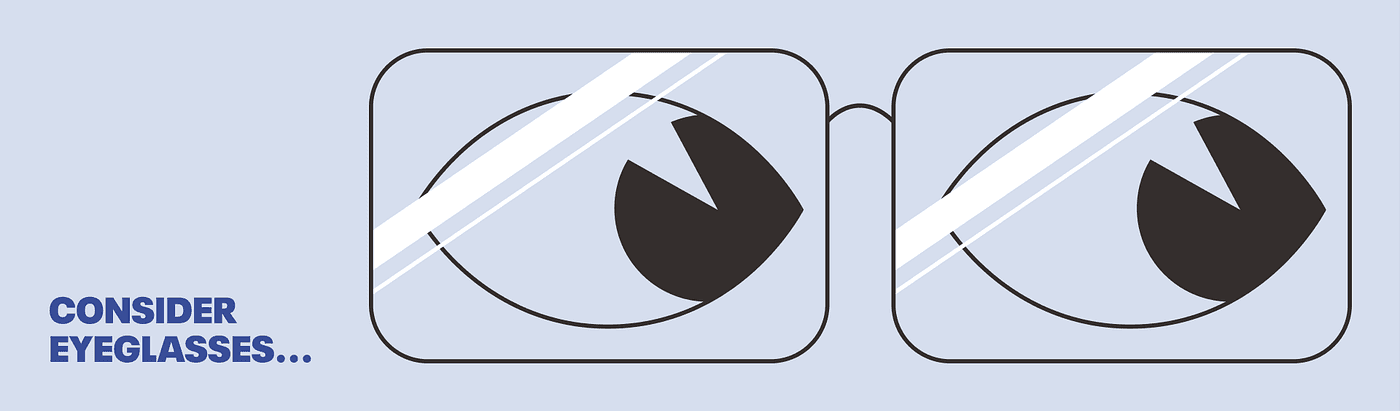
Illustration showing eyes looking off to the side wearing eyeglasses.
Sara Hendren, an artist, design researcher, and author of ‘What can a body do? How do we meet the built world’ offers this definition.
“Ability and disability may be in part about the physical state of the body…but they are also produced by the relative flexibility or rigidity of the built world.” — Sarah Hendren
The medical system in the United States is unprepared to care for this number of people with chronic conditions. The CDC states that, ‘1 in 3 adults with disabilities 18 to 44 years do not have a usual health care provider’. These people are left to fend for themselves and do not have the skills necessary to self regulate their physical and mental health needs.
During the course of research for this project, I spoke with 9 people who experience chronic illness, 5 Medical Practitioners, and a Death Doula — focusing my efforts within the United States medical system. The people with chronic illnesses that I spoke with experience complex disorders that are notoriously difficult to diagnose–namely, Multiple Sclerosis, Fibromyalgia, various forms of Arthritis, and Mast Cell Activation Syndrome, among others. All of the participants recounted stories of deep isolation, fear, and trauma from navigating the medical system.
Press enter or click to view image in full size
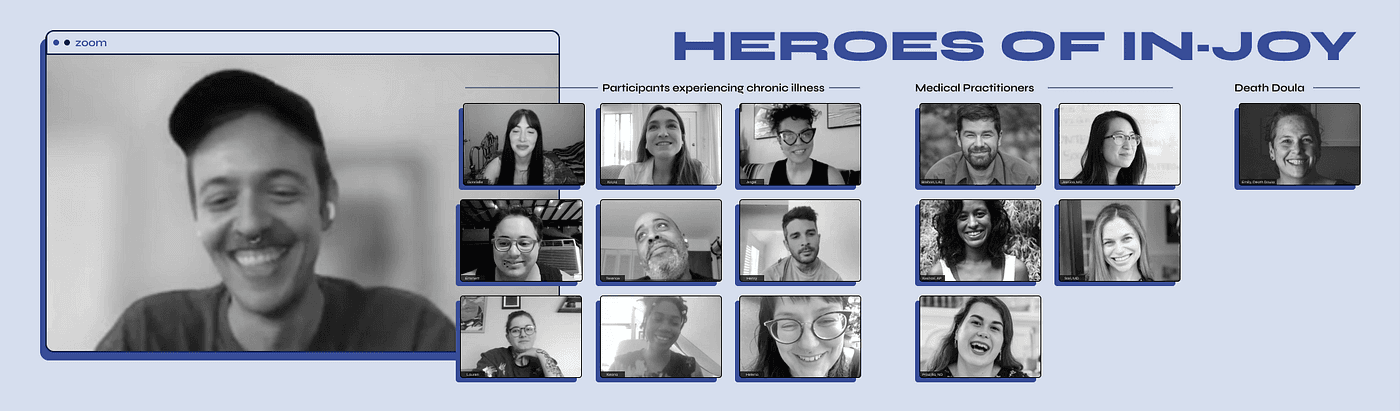
Image of all the participants who helped guide the process of IN·JOY
The Medical Practitioners I spoke with shared perspectives from Western Medicine, Naturopathy, Chinese Medicine, Accupuncture, & Ayurvedic forms of healing. Brehan Crawford, an Acupuncturist and Chinese Medicine Clinician based in Oregon offered this insight:
“A big part of what I think contributes to the suffering that patients with chronic illness experience is the ongoing way that they are traumatized by dealing with medical providers and medical offices.” — Brehan Crawford LAc
Facing the entirety of trauma orchestrated by the western medical system was too daunting of a task for the time constraint of this project. However, an area of complexity revealed itself during some early conversations with people experiencing chronic conditions. It’s also a topic that doctors seemed to avoid — what happens to a patient who remains undiagnosed? And due to the complexity of chronic conditions, diagnosis can take years or decades, and sometimes is never attained.
In allopathic medicine and western culture, we rely on diagnosis to receive treatment, and through that diagnosis we connect to one another through common language.
Press enter or click to view image in full size
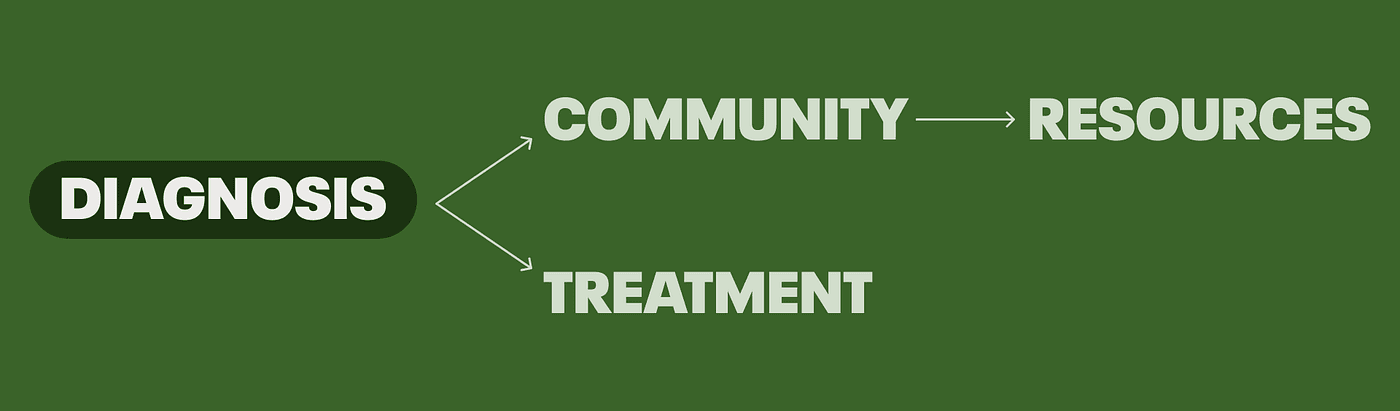
Graphic showing that diagnosis creates opportunity for community and resource gathering.
An example of this is ‘Nancy’s Nook’, an online Endometriosis resource center. Endometriosis is a condition where tissue, similar to that of the lining of the uterus, grows outside the uterus. It is an intensely painful, and debilitating condition. Because so many people experience painful menstruation cycles, endometriosis is one of the most difficult conditions for doctors to diagnose. When people are diagnosed with endometriosis, they can use Nancy’s Nook as a platform to learn more about the diagnosis, understand viable treatment options, and even find endometriosis-informed doctors.
It is life-saving for these platforms to exist. However, due to the difficulty of receiving the diagnosis–these people experience intense pain for years without resources. I spoke with Angel, who said this:
“It takes an average of 10 years of living in pain before you get the diagnosis of having endometriosis. And then it’s like another seven years for treatment. And you go through an average of 10 doctors to get to that point.” — Angel
For Angel it was 19 years. 19 years with no resources or a clear way to communicate to her loved ones, medical care team, or to herself about what is happening within her body. This framework of resource allocation breaks when we don’t receive a diagnosis.
Press enter or click to view image in full size
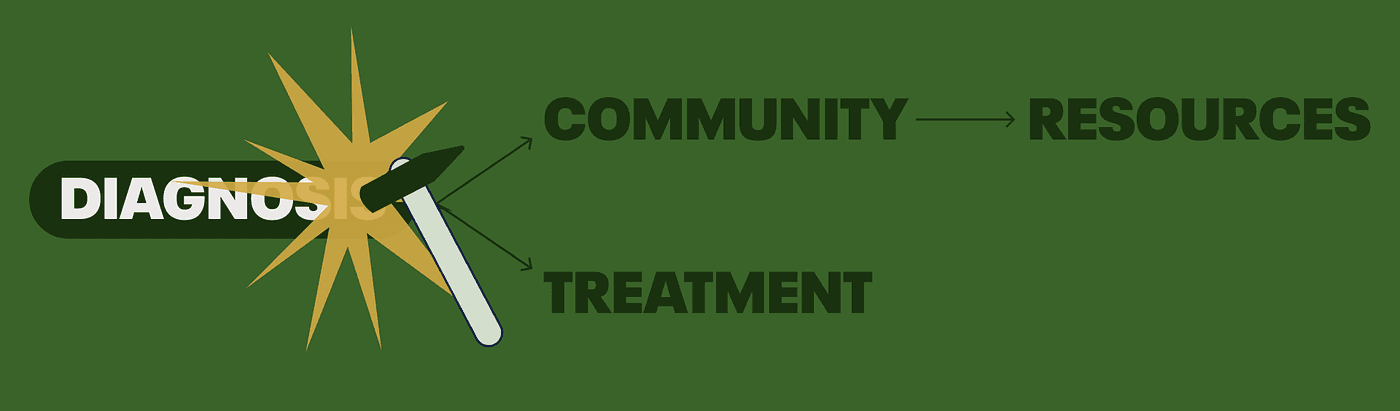
Graphic demonstrating that without a diagnosis people experiencing chronic conditions do not have access to community or treatment that they need.
Key Insight #1:
The western medical system does not offer tools for support in the emotional or physical management of chronic illnesses until they are diagnosed. If you don’t have a diagnosis, one is left to feel alone with the severity of their symptoms and is unable to connect with a community.
The Mental Burden of Disability:
During this period of being undiagnosed, the person experiencing chronic illness is left without a paddle to navigate the mental strain of bodily uncertainty. Doctors are meant to be guides — demystifying the body and shining a light on the path towards healing, but due to the current constraints of the medical system, these people are left to fear for their intrinsic safety, bodily autonomy, and quality of life.
Here’s a mental modelI heard frequently in my conversations with people experiencing chronic illness.
Press enter or click to view image in full size
“I am in so much pain” -> “What is wrong with my body” -> “Will I always feel this way”
A negative feedback loop like this further traumatizes a person experiencing chronic illness. Acute pain is an alarm system, telling you that something is wrong. When pain becomes chronic, the mind becomes overburdened into hypervigilance.
“Chronic pain literally changes our neural pathways, making them more sensitive, essentially teaching our brains and nervous systems to continue sending out these pain messages.” — Pathways Health
Key Insight #2:
Many chronic illness patients experience dysregulation of their nervous system, this presents itself as severe stress or anxiety. This stress cycle gives further feedback to the body that it is in danger, and it is not the time to heal.
All of the people I spoke with referenced the severe forms of mental burdening that happens as a result of the effort needed to care for one’s own body. Gabrielle, a woman in Los Angeles living with Multiple Sclerosis offered this:
“I just kept hearing…it’d just be easier to die…So like people with partners who aren’t on their side, or like maybe they’re going through this totally alone. I really, really fear for them. I really fear for them because if I didn’t have a really supportive dad, and a fiancé, and like a goofy best friend, I don’t know what would have happened to me. I really don’t.” — Gabrielle
It is clear that community is essential for those navigating chronic illness. But what does community look like in this landscape?
What Is The Role of Community in Chronic Illness?
As people experiencing chronic illness search for community, we run into the same problem of diagnosis. If people are lucky enough to have received a diagnosis — they often search for answers within digital communities. Many of which are hosted on Facebook. However, these communities also come with a host of problems. When the language that tethers the community together is a list of diagnostic qualifications (if you experience x, y, and z symptoms, then you can be a part of this community), then we show up as our illness & pain in order to be members of these communities.
In addition to the challenges, there are major benefits to being a part of these virtual communities. It is powerful, and important, to be able to relate to one another based on shared, and oftentimes, painful experiences. I joined several of these online communities in an effort to understand the roles these platforms played. Here are a couple posts you might see within these forums.
Press enter or click to view image in full size
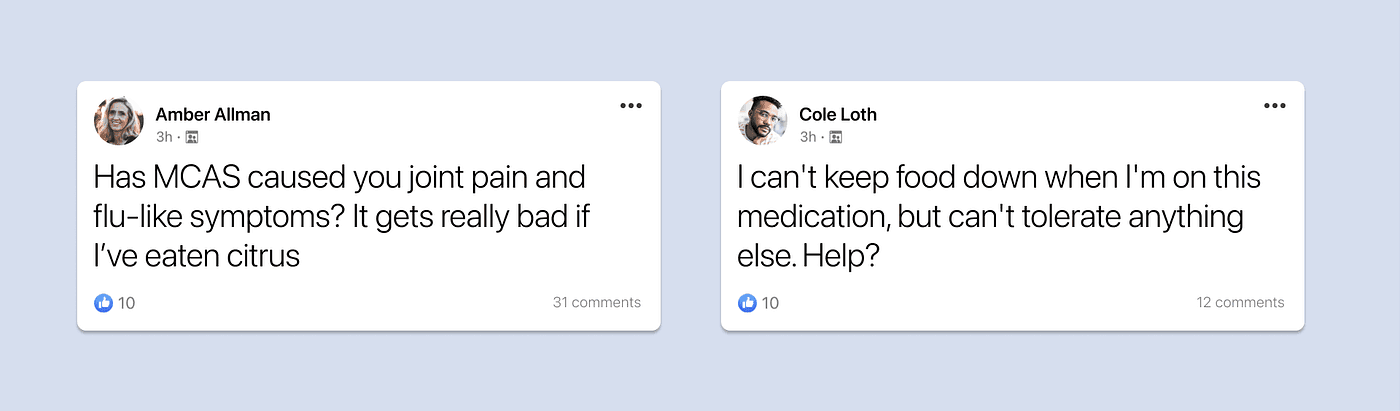
Facebook posts showing examples of people asking for help within online communities. The left post reads “Has MCAS caused you joint pain and flu-like symptoms? It gets really bad if I’ve eaten citrus”, the right post reads “I can’t keep food down when I’m on this medication, but can’t tolerate anything else. Help?”
These posts seem to ask the community to validate or normalize a person’s bodily experience. Again, it is important these spaces are available. But, they can also be inflammatory to a person’s nervous system & may contribute to more feelings of fear & hopelessness. I asked Terence, who lives with Multiple Sclerosis, what he would want to see represented in an ideal community for him.
“You know, it’s funny, but like, [I wouldn’t want a community that has] anything to do with the disease. I almost don’t want to hear about how your disease is progressing and that you fell down the stairs. Or that you’re incapable of using a fork anymore or however it manifests itself. But like…how you’ve overcome that.” — Terence, MS
The Problem Area
Through the culmination of these stories from patients, expert interviews, and desk research into the phenomenon of chronic illness — the problem to solve for became clear.
Press enter or click to view image in full size
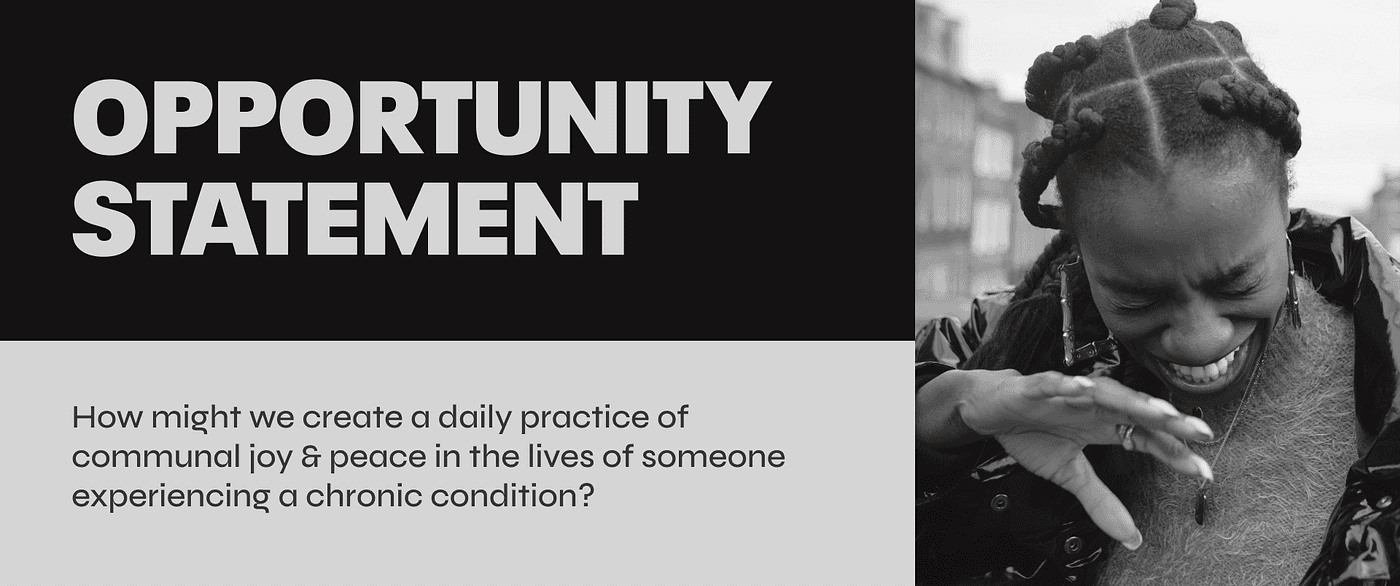
Graphic sharing the opportunity statement, which reads “How might we create a daily practice of communal joy & peace in the lives of someone experiencing a chronic condition?”
What is Peace?
With the problem now identified, a new question arose — What is peace, and how do we attain it? I asked many people if they could send me a photo of an item in their life that brings them a great amount of comfort. I discovered that there are two main categories of comfort objects — those that we use in rituals, and those that are talismans imbued with emotion.
Ritual Objects
Press enter or click to view image in full size

An image of Mia’s comfort object — her favorite mug
Ritual objects are things that we use to punctuate our days, they will often be used as a way to transition the body and mind into a new headspace. For instance, I asked Mia, a friend of mine, to share a photo with me of an object that brings her joy. She shared a photo of a mug she got on one of her trips. At the end of her day she pours herself a cup of tea, signaling to her brain and body that the day is done — it is time to rest. The mug provides a vehicle for the body to begin to unwind from the day.
Talisman Objects
Press enter or click to view image in full size

Talisman objects are things that we adorn ourselves with because of their emotional quality. For instance, when I asked Gabrielle, a participant in this study, to share with me an object that brings her joy–she shared with me her father’s ring. She said that when she wears the ring, she feels a sense of her father’s strength that she now has access to.
Ideation & Low Fidelity Prototyping
With this framework in mind, I ran many rounds of ideation, and narrowed to two design interventions to move forward with in the testing phase.
Idea 1: Ritual Breathing
Press enter or click to view image in full size

Sketch of ritual breathing idea and gif of Wolfe bodystorming the idea by breathing on a vibrating mat.
The first idea can be thought of as a yoga mat with a capability for sensory feedback. The mats would be connected to one another via wifi capabilities so that when two people sit or lay down upon it–they would receive haptic feedback of that person’s breathing pattern in the form of vibration. The mat would slowly guide them to synchronize and deepen their breathing. This intervention co-regulates the nervous system through social breathwork, the goal of which being to achieve a greater sense of ease and community.
Idea 2: Joy Talisman
Press enter or click to view image in full size
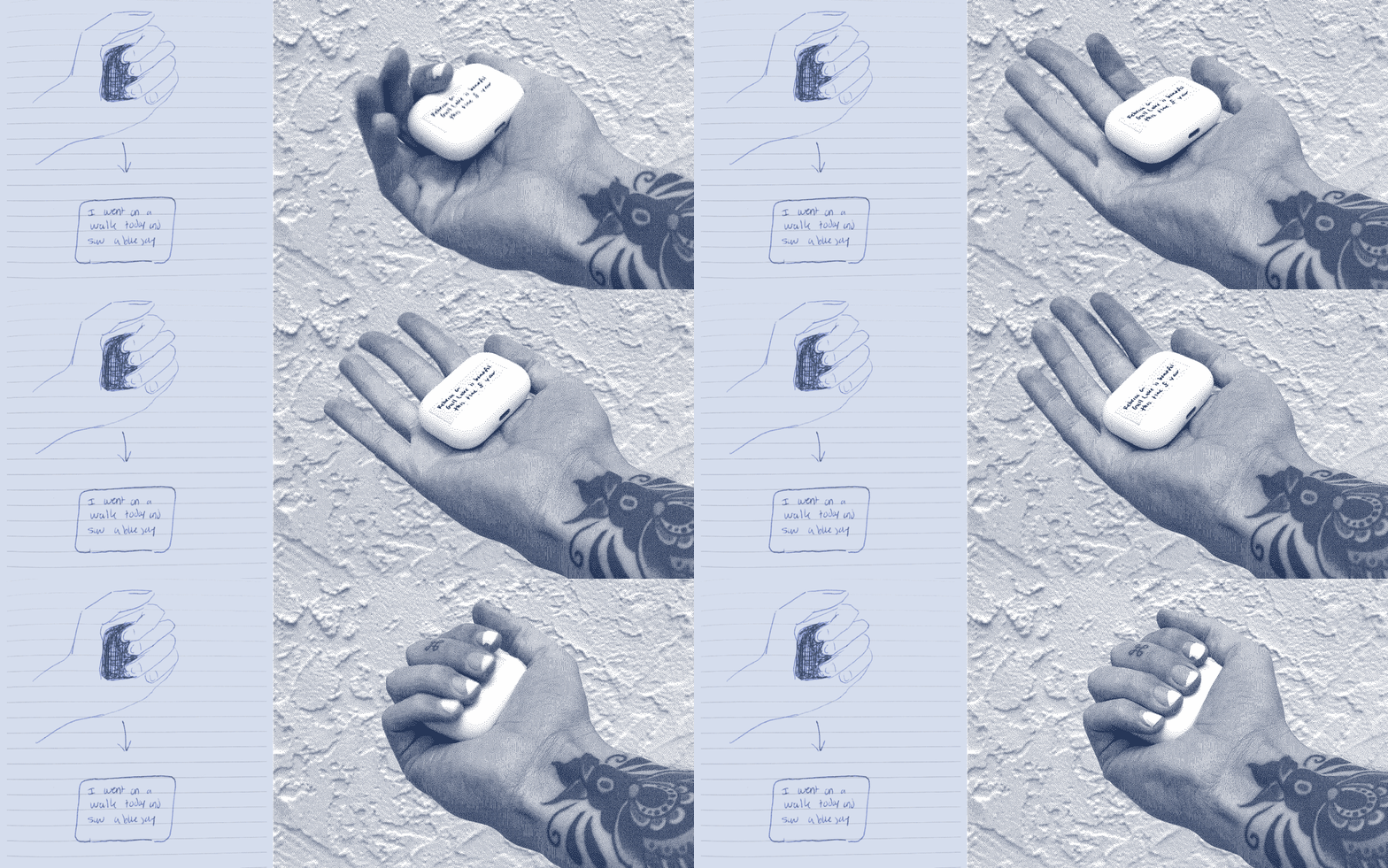
Sketch of Joy Talisman idea and gif of Wolfe bodystorming the idea by squeezing apple airpods case with a message being revealed
A handheld device that when squeezed, reveals a message from the chronic illness community that highlights a moment of joy from their day. This intervention seeks to expose people experiencing chronic illness to the possibility of joy from other people in similar positions.
Feedback From Testing Sessions
I began with very low-fidelity testing with members of the chronic illness community to try to understand what was the core value in each of these experiences, and to identify any potential issues with them for this audience.
Testing for Ritual Breathing:
I walked participants through the experience and asked them to simulate it by sitting or laying down and breathing simultaneously with a recording of myself breathing. The response was striking, and not in the way that I was anticipating.
Press enter or click to view image in full size
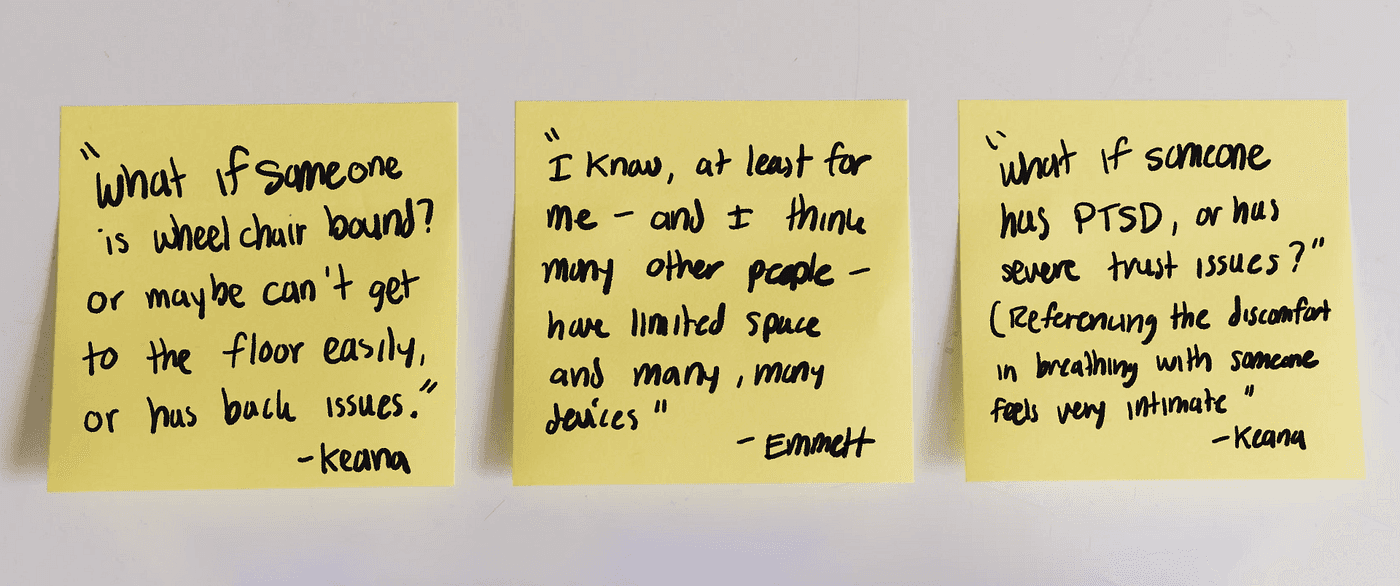
“What if somebody is wheelchair bound or maybe cannot get to the floor as easily, or like has back issues.” — Keana
“I know like, at least for me, and I think many other people do have like limited space and many, many medical devices” — Emmett
“[What if] someone has like…PTSD, or if someone has severe trust issues.” (Referencing the discomfort in breathing with someone you don’t know being so intimate) — Keana
It became evident quite quickly how many issues there were with this intervention.
Testing for Joy Talisman:
I asked participants to squeeze their hand, and when they released it, I read a moment of joy that was submitted to me from a person within the chronic illness community.
Here is some of the feedback I received from this exercise.
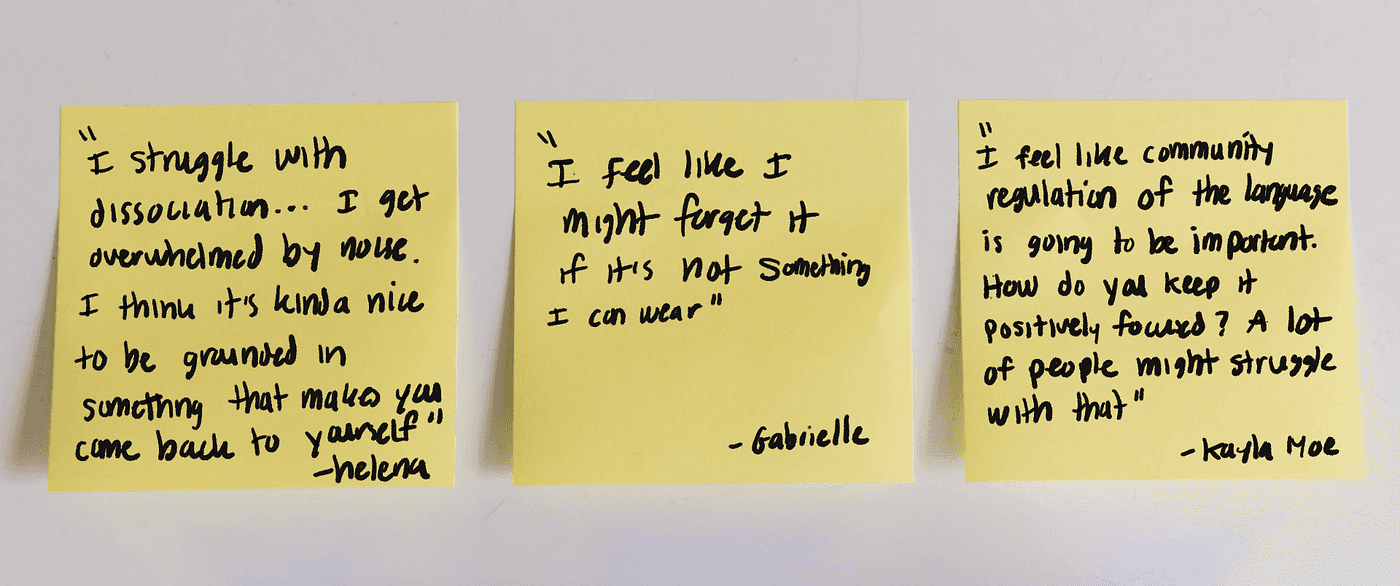
“I struggle a lot with dissociation…I get overwhelmed by noise. I think…it’s kinda nice to be grounded in something that makes you able to come back to yourself a little bit.” — Helena
“I feel like I might forget it if it’s not something I can wear” — Gabrielle
“I think community regulation of the language is going to be very important. Like how do you keep it positively focused? Because unfortunately a lot of people might struggle with that or might take advantage of the platform.” — Kayla Moe
Through this phase of testing, I was able to learn that the Joy Talisman had fewer accessibility barriers and felt more intuitive. With this new information, it became clear that the direction to go towards was the Joy Talisman. This set the stage for what would become IN·JOY.
Content Strategy & UI System
The low-fidelity testing brought to light some additional layers of complexity, one of which being how to promote positivity without censorship. I needed to come up with a content strategy that could shift the mind towards joy in a way that felt like the person could connect with themselves and to the community.
I began to break down the different elements of what makes up a community. I always considered community to be an open system, one in which participants can freely express themselves to one another at any time. However, a conversation that really shifted my perspective was one I had with Emily Eliot Miller, a death educator and doula. She had this to say about community:
“For me, [community] is a listening practice. It helped me so much just to feel less alone…and to hear other people’s insights”. — Emily Eliot Miller
This struck me, because I always considered a community to need a free flow of dialogue between speaker and the listener, the roles of whom could change at any time. But, with this new perspective, this offering could be a closed loop communication system where the participants could actively listen to the community & contribute in a way that encourages listening from others. By closing the conversation loop to a listening model, we could also prevent any negative feedback in the form of commentary that may prevent someone from feeling safe to express their joy. So essentially, there is no direct communication between community members, only observing and “liking” through haptic feedback.
With this practice in mind, I constructed the wireframe for the app that a person could use to access the daily prompts for joy, & submit their responses to the community.
Press enter or click to view image in full size
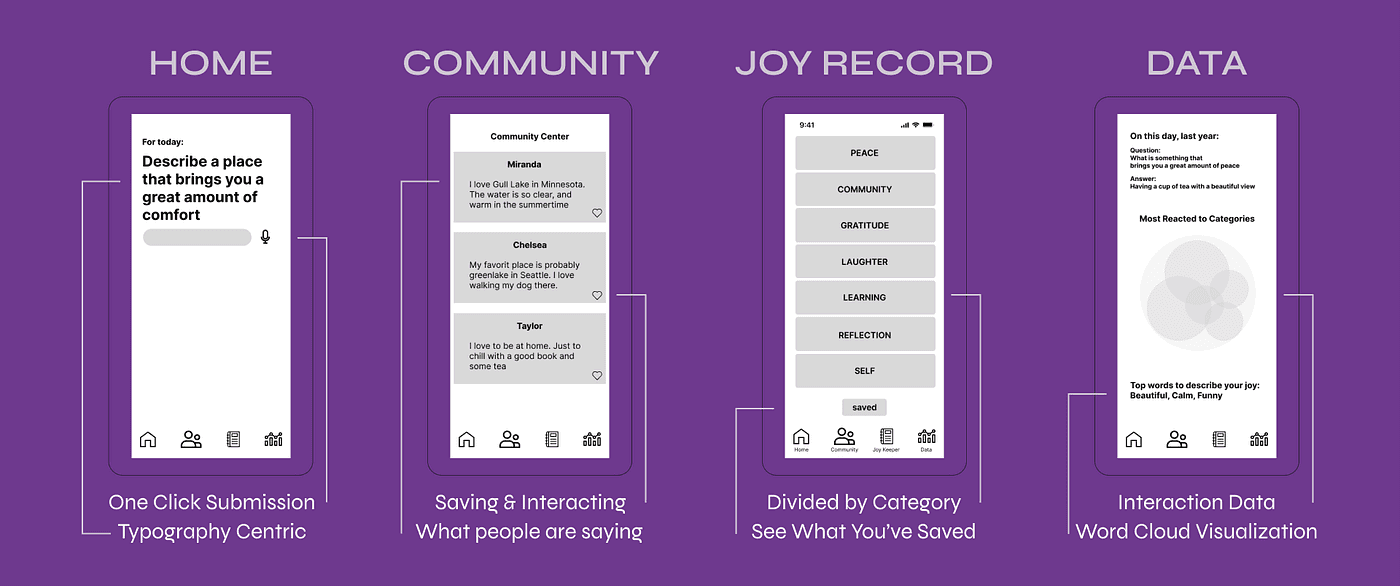
Key Screens
Home — Where to find & respond to the question of the day
Community — Where to access responses to the days question from members of the community
Joy Record — A users previous responses to prompts, a sort of digital journal of previous joy.
Data — Shares important milestones & data visualizations to show the user a new perspective of their joy.
Each day, members of the community receive a prompt from within the app that guides the mind towards joy. Participants can type in or voice record their entry and submit it for the community to be able to read or listen to.
In order to nudge users back to the app each day, the UI changes color to reflect a change in question category. Even if a person is visually impaired or color blind, the UI system is rooted in typography and not solely reliant on color to provide information.
Press enter or click to view image in full size
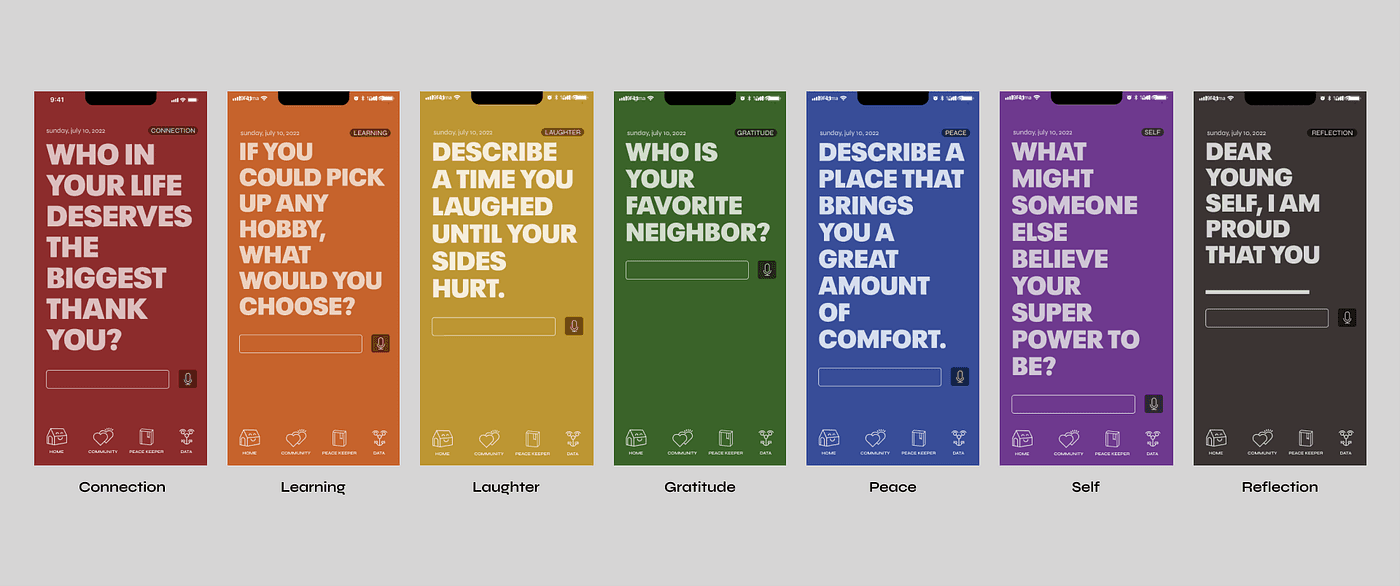
Graphic showing the changing color system of the UI design. Monday (Red) is for connection, Tuesday (Orange) is for learning, Wednesday (Yellow), is for laughter, Thursday (Green) is for gratitude, Friday (Blue) is for peace, Saturday (Purple) is for self, and Sunday (Grey) is for reflection.
Tangible User Interface
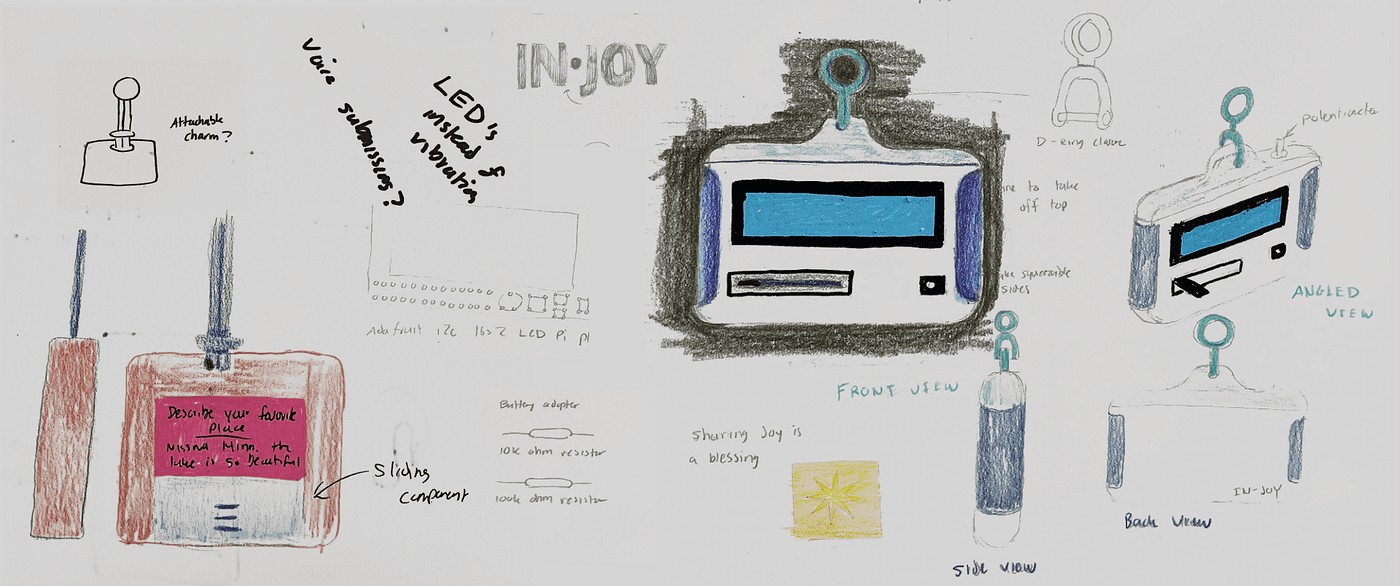
Initial sketches for the form factor of IN·JOY’s physical component
The handheld device is a supportive aspect of this intervention because of its tactile, grounding, and discrete nature. In my research, I discovered that many people with chronic illnesses carry and handle stim objects in order to cope with overstimulation in their environment. “Stimming’’ is the repetition of physical movements, sounds, words, moving objects, or other repetitive behaviors as a protective response to overstimulation. So to have a physical object that was solely dedicated to grounding a person in joy, was helpful in making the experience more impactful.

Low fidelity prototype testing of the form factor for the tangible device. In this phase I was questioning ergonomics and what felt the most intuitive to use.
Factors that informed the design of IN·JOY’s tangible interface:
Small enough to be used with discretion
Tactile haptic responses to aid in grounding one’s self
Form factors that allowed for fidgeting
A feeling of being “heard”
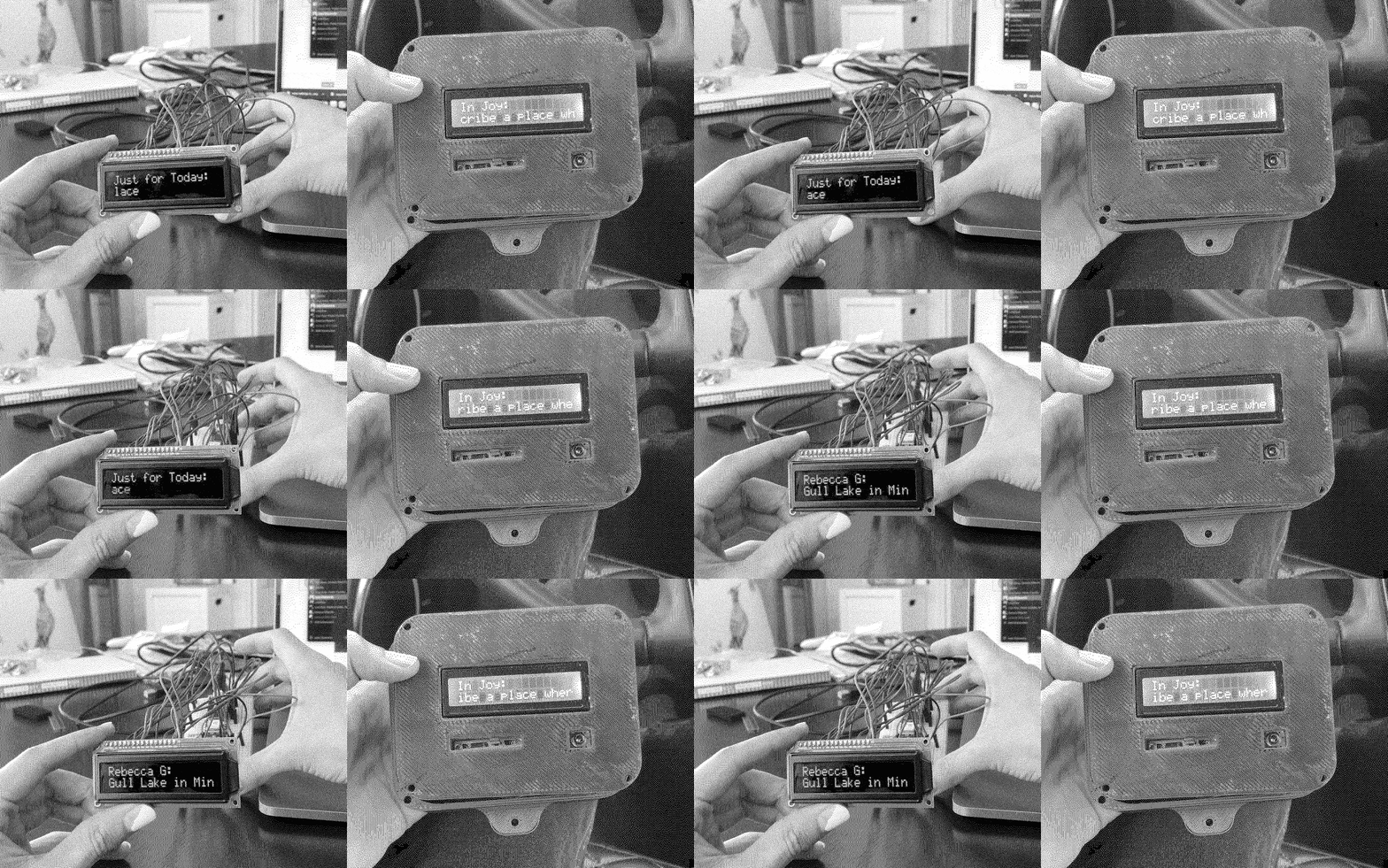
Mid fidelity prototype of IN·JOY’s tangible experience
The gif of the device above is the one that I used in testing with participants. Through testing the entire interaction, using both the app and the device, I discovered that the key value in the experience was the app. Participants shared that the app was much more accessible, but that the tangible device felt supportive and grounding.
From testing with this prototype, I learned quickly that it was far too large for people to be able to handle it with ease. Due to the time constraint of the project, the final render of the object exists as a 3D printed proof of concept, with opportunity to continue to improve and reduce the size of the electronic components.
Key Touchpoints of the Tangible Experience
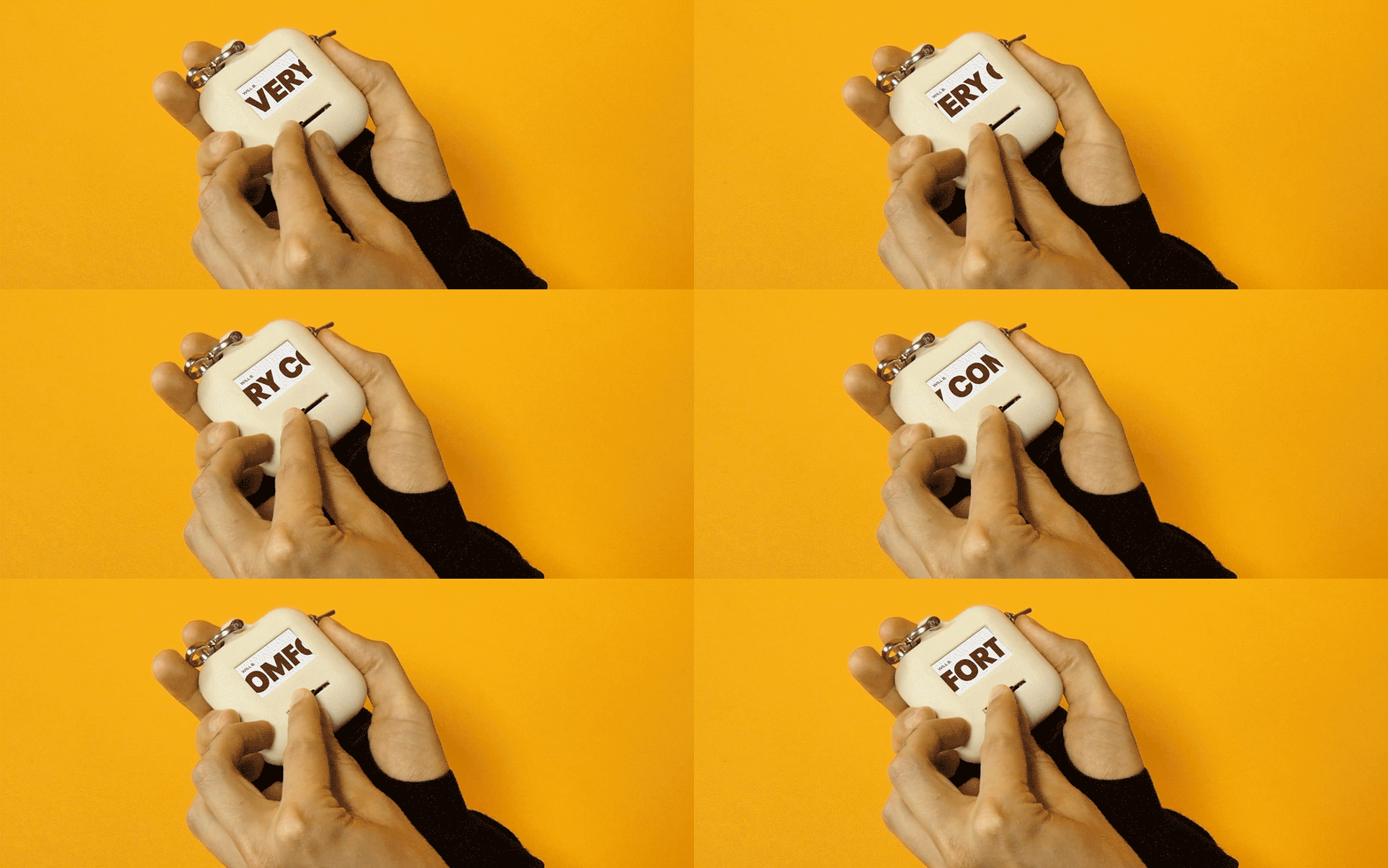
Tilt the device to see how someone from the community responded to the question of the day. Tilt again to see another answer from a different person.

The text will automatically scan across the screen, but you are able to read at your own pace with the potentiometer underneath the screen.
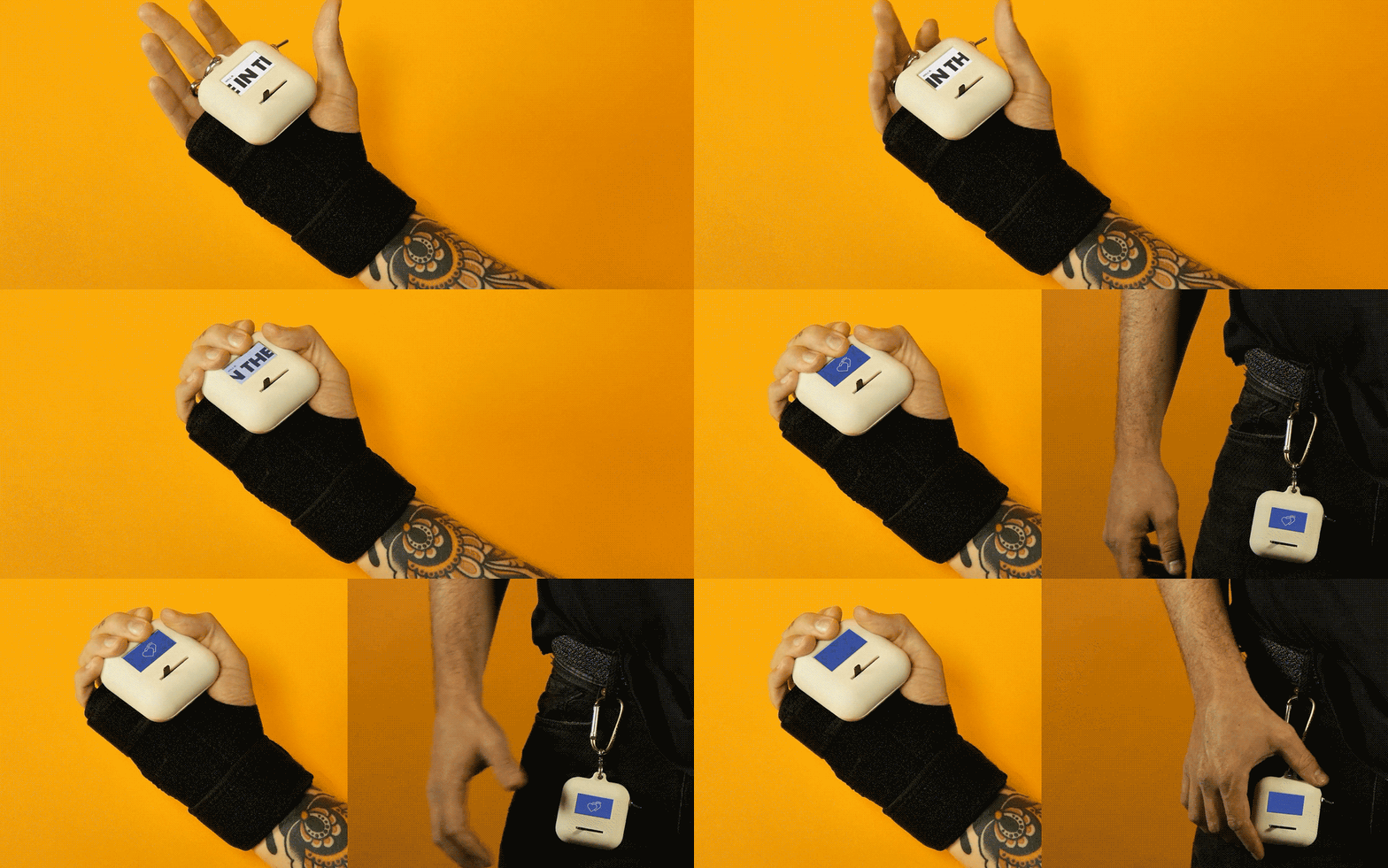
If you love what someone has shared, send a little joy by squeezing the device, this will send a notification & vibration to the device of the person who wrote the entry.
Why Is IN·JOY So Impactful?
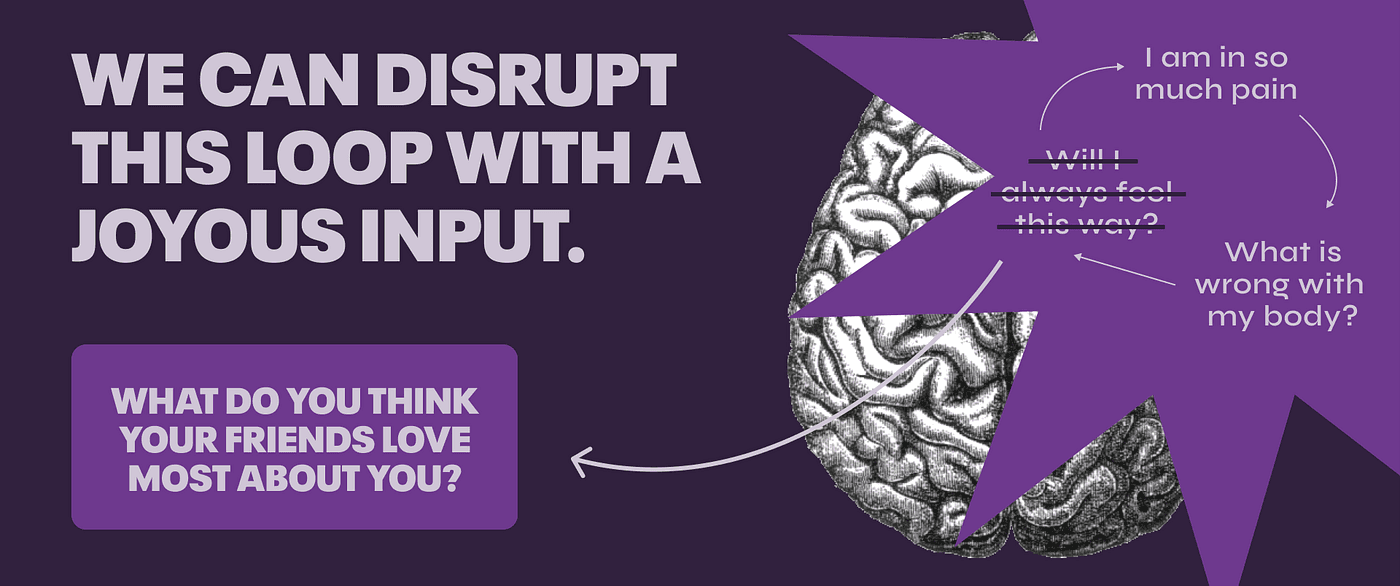
Chronic pain is often a malfunctioning feedback loop. By being able to connect with people with similar lived experiences on the basis of joy, we have an opportunity to disconnect from this loop.
“This seems amazing. I love the simplicity of it, but I also love…how there’s like a real meaningful quality to it because you’re talking about things that matter to you on a deep level. It’s not just like some kind of social media that is like self serving only, It feels self reflective and communal. — Henry
This is so Impactful. Because, if I’m waking up in the morning, they might also be feeling super stiff in bed, but that doesn’t necessarily stop their mind from trying to find something happy to start the day. — Kayla Moe
IN·JOY was an incredible gift to produce. I want to thank the nine people research participants who experience chronic illness for allowing me to see a glimpse into their lives and for teaching me the true meaning of joy and kindness. Angel, Gabrielle, Kayla Moe, Emmett, Terence, Lauren, Henry, Keana, Helena, thank you so very much.
Please enjoy the final prototype video: